By day, I’m a startup founder building JustPaid.ai—automating B2B revenue ops one contract at a time. By night, I’m deep in peptide rabbit holes, obsessed with biohacking tools and protocols.
If you’ve ever wondered how to test peptides, why you should care, or which labs to use this guide is for you.
What is Testing?
Testing is the process of verifying a product’s identity, purity, composition, and potency. Common techniques include:
HPLC (High Performance Liquid Chromatography)
NMR (Nuclear Magnetic Resonance)
MS (Mass Spectrometry)
These methods help confirm you’re getting the right compound in the right amount—and that it hasn’t degraded or been cut with harmful fillers.
💡 Why third-party testing matters:
Vendor-supplied Certificates of Analysis (COAs) can be biased or fabricated. Independent lab testing ensures you are in control of quality assurance.
What Tests Should You Order?
🔁 Every Order (Must-Haves)
HPLC for Purity & Mass Fill
This test confirms the correct peptide and dosage (mg of active pharmaceutical ingredient, or API). It also flags degraded peptides or synthesis errors.
We request:
Purity ≥ 98%
Mass fill within ±10% of label claim
Raw chromatogram data to validate the test
📆 Periodically (Nice-to-Haves)
NMR F-19 for TFA (Trifluoroacetic Acid)
TFA is a cheap counterion that shows up as a residue from synthesis. For something like tirzepatide, used weekly or long-term, we don’t want TFA salt forms.
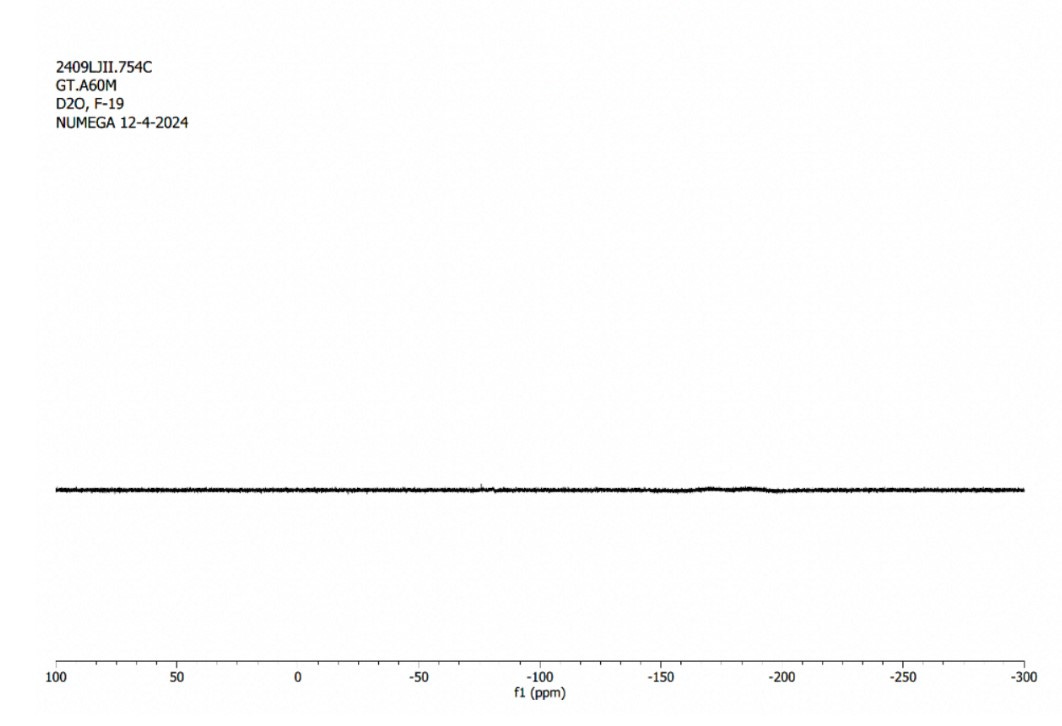
🧠 Look for no peaks between -73 to -76 ppm in F-19 NMR spectra.
Endotoxin (LAL Assay)
Even though SPPS (solid-phase peptide synthesis) should be sterile, vendors don’t always disclose manufacturing hygiene.
🧪 Aim for <10 EU/mg of API (based on FDA standards for injectable tirzepatide).
Heavy Metals
Not typically present in SPPS—but it’s worth confirming with occasional checks for arsenic (As), cadmium (Cd), lead (Pb), and mercury (Hg).
❌ Not Necessary (But Frequently Asked)
Sterility (USP <71>)
Skip this if you’re:
Using 0.22μm PES filters when reconstituting
Storing lyophilized peptides in a freezer
Using sterile technique
GC-FID for Residual Solvents
Class 1 solvents (like benzene) are rarely used and extremely volatile (boiling point <85°C). Instead of testing for everything, we use F-19 NMR as a proxy to flag sloppy synthesis.
See Residual Solvents for more detail.
Which Lab Should I Use?
There are many domestic labs who can run HPLC, NMR, and more, including university labs. The following are some trusted lab testing options - domestic and international.
How Do I Read My Test Results?
HPLC
We’re looking for..
a purity value of 98%+
a potency within ±10% of expected potency (mass fill)

High-Performance Liquid Chromatography (HPLC) measures how well a peptide like tirzepatide was synthesized and how stable it remains - essentially assessing purity accounting for degradation. We use >98% purity as the benchmark, aligning with FDA-regulated 503a/b compounding standards. HPLC also measures API potency: how much peptide is actually in the vial. A ±10% range is our standard for potency, reflecting what many vendors guarantee. USP <905> allows ±15% batch variance, with no individual unit exceeding ±25% from the target.
HPLC is calibrated to detect a specific peptide, and if the expected peptide is absent, the test will show no “peak” in the resulting data. This detection is benchmarked against reference sample runs using the target peptide reference sample CAS.
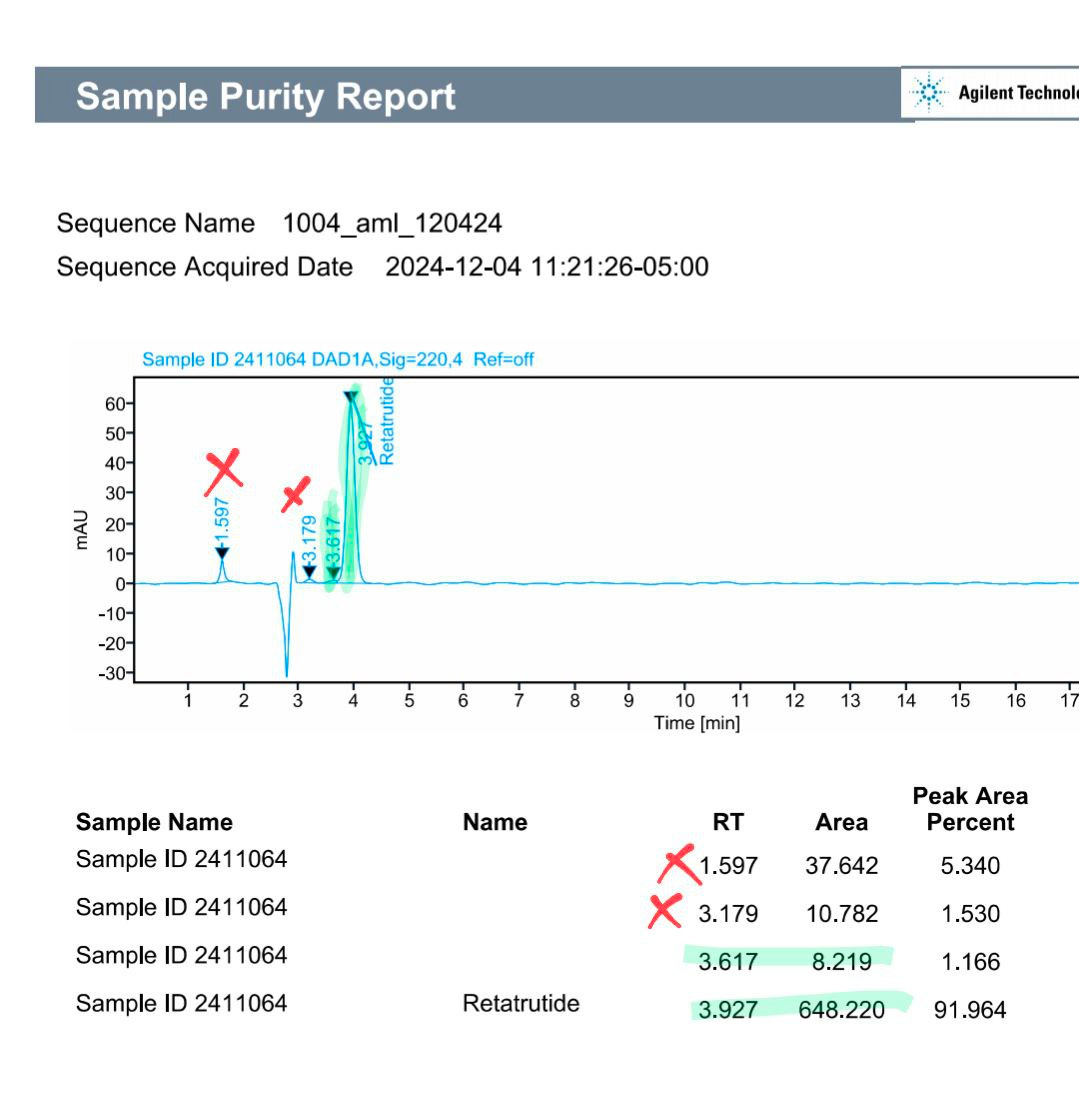
Once a peak is identified at a specific retention time (RT), its Area Under the Curve (AUC) is calculated to measure the peptide’s purity and potency. The main peak should appear at a predictable time, and any smaller, nearby peaks in the chromatogram are also analyzed. These smaller peaks often indicate degraded peptides (a.k.a. deamidation) or other similarly sized compound to the peptide (i.e. other synthetic peptides or polysaccharides), and are generally included in the AUC calculation to provide a final purity value.
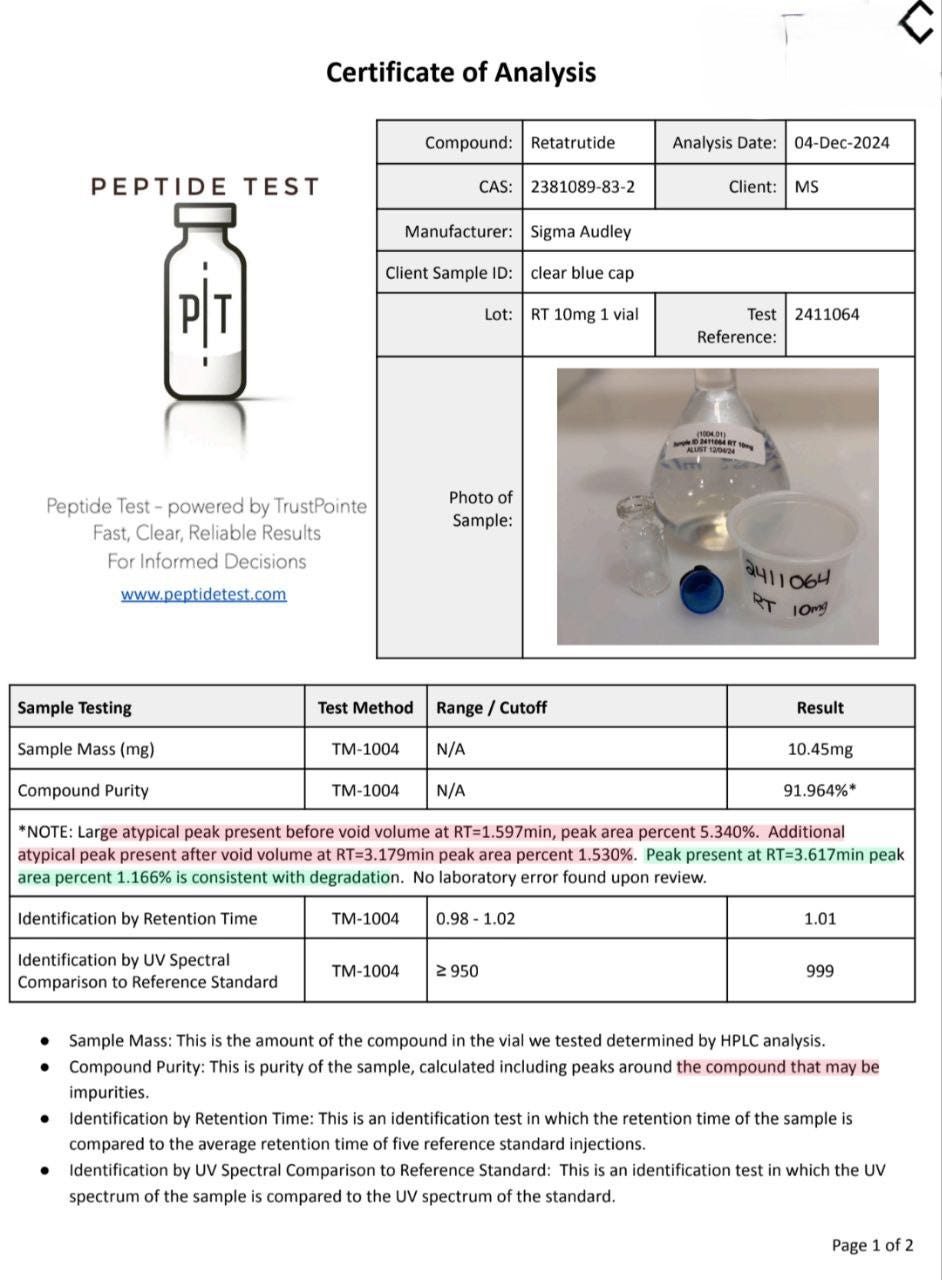
Labs may vary in their approach to integrating smaller peaks into the purity calculation. Degraded peptides are typically included, while “unidentified fillers” might be excluded or noted separately. Known fillers such as mannitol, a stabilizing sugar added for lyophilization, are not included in the AUC calculations used to calculate purity. Requesting raw data is crucial for transparency, as it allows you to understand how the final purity value was determined and often can easily explain the purity % differences between labs.
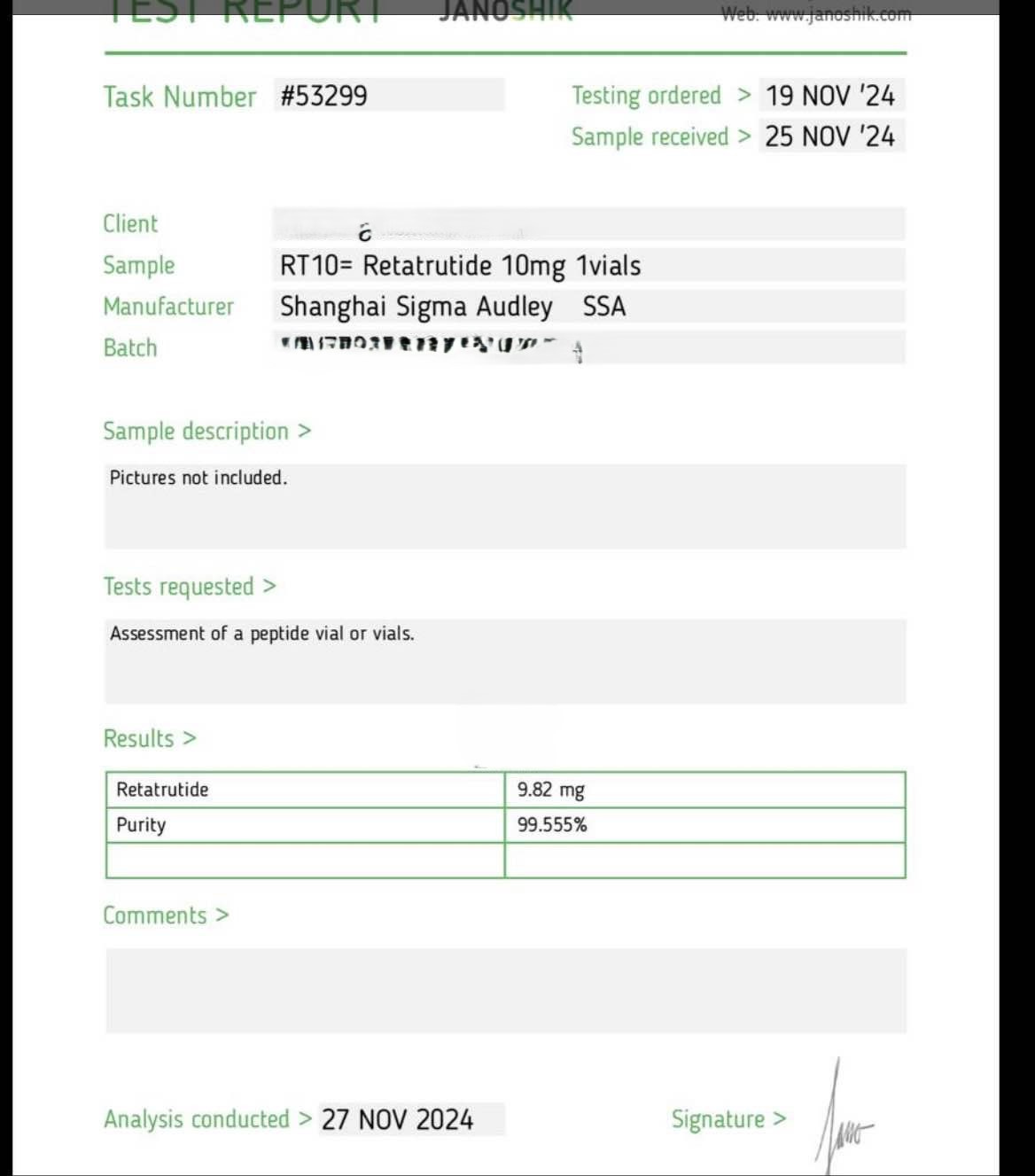
For instance, the main peak for Retatrutide was measured with an AUC of 648.220, alongside smaller peak AUCs of 37.642, 10.782, and 8.219. PeptideTest included two of these smaller peaks (37.642 and 10.782) as “unknown filler” into their AUC calculation, while Janoshik did not. Adjusting for this discrepancy, PeptideTest’s calculated purity becomes 648.220 ÷ 656.439 = 98.75%, aligning with an acceptable margin of error between the two tests on the same retatrutide batch.
PeptideTests Retatrutide HPLC
Janoshik Retatrutide HPLC
NMR F-19
We’re looking for..
a blank spectra chart with no peaks around -73 to -76ppm
Nuclear Magnetic Resonance (NMR) spectroscopy using fluorine-19 (F-19) is used to detect and quantify trifluoroacetic acid (TFA) in peptide samples. Since TFA contains three fluorine atoms, it produces a distinct and highly sensitive signal in NMR F-19 at around 76ppm. This method is ideal for identifying presence of both residual and counterion TFA.
Endotoxin
We’re looking for..
<10 EU/mg
The endotoxin test using the LAL (Limulus Amebocyte Lysate) assay, detects lipopolysaccharides (LPS), which are toxic components of bacterial cell walls. A positive result indicates the presence of endotoxins, measured in Endotoxin Units (EU). For injectable tirzepatide, regulatory guidelines for FDA regulated 503a/b pharmacies sourcing their API tirzepatide are <10 EU/mg of API. There is also a USP set for 5 EU/kg body weight/hour that we could calculate, but this is for all sources of endo encountered in a time period, so we recommend the simplicity of using the 10EU/mg standard set for regulated tirzepatide instead source
Janoshik reports endotoxin by EU in the entire vial, so we will need to first convert to EU/mg. X is the reported EU and Y is the API potency in mg. For example:
EU/mg = X EU ÷ Y mg vial
Example: If the vial tested contains 30mg API and the test resulted in 6 EU, then
EU/mg = 6EU ÷ 30mg = 0.2EU/mg, which is lower than the 10EU/mg limit
Generally, endotoxin test results are reported in EU/mL by Peptide Test (TrustPointe) so we will need to first convert to EU/mg using the known solution concentration the lab used to run the test. TrustPointe uses 2mL to dissolve the sample. X is the reported value, and Y is the API potency in mg of the vial. For example:
EU/mg = X EU/mL ÷ Y mg/2mL
Example: If the vial tested contains 30mg API and the test resulted in 8EU/mL, then:
EU/mg = 8EU/mL ÷ 30mg/2mL = 0.5EU/mg, which is lower than the 10EU/mg limit
Disclaimer
This is not medical advice. The content on this Substack is for informational and educational purposes only and is not intended to serve as a substitute for professional medical advice, diagnosis, or treatment. Always consult with a qualified healthcare provider before making any decisions regarding your health or the use of peptides.
My experiences with peptides are personal and may not be typical. Individual results can vary widely based on personal health conditions, lifestyle, and other factors. Do not rely on my experiences as a guarantee of similar outcomes.
The information provided here does not constitute an endorsement or recommendation by any regulatory authority, including the FDA or other health organizations. Some peptides may be experimental or not approved for general use.
I am not liable for any losses, injuries, or damages arising from the use or misuse of information shared on this Substack. Readers are solely responsible for their own actions and any decisions made based on this content.
The peptides discussed are for research purposes and may not be intended for human use. Please ensure compliance with all local laws and regulations regarding the purchase, possession, and use of peptides.
Credit to seeker-seventy-six
This post first appeared on Substack. Read the original, leave a comment, or subscribe to get the next one in your inbox.
Comments live on Substack. Subscriptions are free and go out every other Sunday.