Hey there, folks! If you’re like me - a busy founder juggling a startup (shoutout to JustPaid.ai, keeping those payments seamless amid the chaos, and we just launched loopfour.ai - workflow automation for finance skills) while trying to stay sharp in this wild tech world - you’ve probably had your ears perk up at anything promising to future-proof your brain. I’ve watched dementia steal away my paternal grandmother and then my dad, bit by heartbreaking bit, I’m all in on stacking the deck against that thief. It’s personal. Seeing them fade like that, was very hard for all of us. Now I’m hustling to keep my mind humming for the long haul, especially now that AI makes continuous learning a breeze. So, when I tuned into Tim Ferriss’ latest podcast with Dr. Tommy Wood episode #851 on “How to Future-Proof Your Brain from Dementia” - my notebook was out!
Dr. Tommy Wood (@DrRagnar) is an associate professor of pediatrics and neuroscience at the University of Washington, where his research focuses on brain health across the lifespan. This includes therapies for brain injury in newborns, prevention and treatment of adult brain trauma, and the factors that contribute to long-term cognitive function and cognitive decline. He is the author of the forthcoming book “The Stimulated Mind'“.
Let’s break it down with what resonated, what I’m already doing, and yeah, my wild anecdotal tales with some nootropic peptides. Proceed with caution, though, I’m not a doctor, just a wellness geek sharing the journey. Always chat with your MD first!
Why This Hits Home (And Why You Should Care Too)
Picture this: My grandma, sharp as a tack in her prime, slowly forgetting family faces. Then Dad, the guy who taught me entrepreneurship by his own example by starting first non-state university “International Business-Academy” in Kazakhstan after the USSR collapse, slipping away the same way over the course of 4 years. It’s not just sad, its devastating, and with the stress off startup life, I aim to navigate it with much knowledge as possible. Dementia isn’t inevitable; Dr. Wood drops science bombs showing 45-70% of it is preventable through lifestyle tweaks. From the Lancet Commission to UK Biobank data, it’s clear: We’re not doomed by genes alone (even if you’ve got that APOE4 wildcard). It’s about metabolic health, stimulation, and not letting your brain rust. If you’re over 40 and feeling the fog creep in, you’ve landed in the perfect spot to dig with me.
The Podcast Lowdown: Key Takeaways from Dr. Tommy Wood
Tim kicks it off teasing out Tommy’s brain knowledge - from newborn neuro fixes to adult trauma and dodging cognitive cliff dives.Here’s the summary of what we heard (spoiler: No magic pills, but loads of “cool things” you can start today):
Brain Basics Across Life: Babies are chubby geniuses: fat stores fuel ketones for rapid brain growth. For injuries? Newborns get cooled to 33.5°C post-trauma (wild, but it slashes disability). Adults with concussions? Ditch fever with Tylenol or Paracetamol, skip sugary carbs, and hit early low-key aerobics to boost blood flow and sleep.
Dementia Dodge Mode: Up to 72% preventable! Top villains: Smoking (quit it), low education (keep learning - AI makes it fun), hypertension, hearing loss, obesity, and couch-potato vibes. Late-onset Alzheimer’s? Lifestyle trumps genes 95% of the time. Track your “brain age” via MRI or tests (online brain tests), and reverse it by being active.
Lifestyle Superhero Serum: Exercise is king- high-intensity like Norwegian 4x4 intervals (4 mins hard, 4 mins rest, repeat) pumps BDNF (BDNF stands for Brain-Derived Neurotrophic Factor. It’s a key protein (a neurotrophin) produced in the brain (and to a lesser extent in other tissues like muscles and gut) that acts like “fertilizer” for your neurons - promoting their survival, growth, maturation, and the formation/strengthening of connections between them) for hippocampal health. Open-skill fun like dance or team sports? Even better for neuroplasticity! Sleep is non-negotiable. Metabolic wins: Nail blood pressure/glucose, and chew xylitol gum for oral health (gum inflammation’s a brain killer). Sensory stuff? Fix hearing/vision ASAP - it cranks engagement.
Supplements Stack: Omega-3s (1-2g DHA/EPA from fish or pills) for neuroprotection - pair with B vitamins to slash homocysteine and atrophy (check VITACOG trials on PubMed). Creatine (10g/day, mornings) for recovery from deprivation. Citicoline (500-1000mg) for post-injury cognition. Polyphenols from berries/coffee, vitamin D if low, and ketones for acute needs (MCT oil for Alzheimer’s energy gaps). Caveat: Not mainstream yet.
Stimulation: Dance tops the list for effect size; bilingualism delays onset, music/games like Super Mario sharpen networks. Error-spotting drives plasticity; create “capacity gaps” to grow. Oh, and air quality? Wildfires or highways nearby? Make sure you have filters at home.
Tommy tempers the excitement with real-talk: It’s probabilities, not guarantees. Start small - one change compounds.
What I’m Already Doing (And Why It Feels Like Winning)
From what I’ve tried, and real talk from experience - this aligns perfectly with my routine. I’m all about hacking recovery to match work’s pace, and Dr. Wood’s intel validates it:
Metabolic Health: Keeping blood sugar steady with intermittent fasting (my go-to for that pep in your step). Plus, quarterly 3-day sardine fasts - sounds weird, I’ve got great results!
Learning Loop: Continuous brain gains? AI’s a cheat code: learning AI now helps to stay in the active brain mode for much later in life.
Sleep Supremacy: Aiming for 8 solid hours, with my supplements like magnesium, glycine and others. Killer for folks who train heavy or burn midnight oil on startup stuff. Creatine daily (feels like a superhero serum for focus)
Sweat: Exercise 5x/week mixing resistance and cardio.
It’s not perfect: my husband’s the same, we slip sometimes, but it’s grounding. Optimistic? Yes. Skeptical? Always; track what works for you.
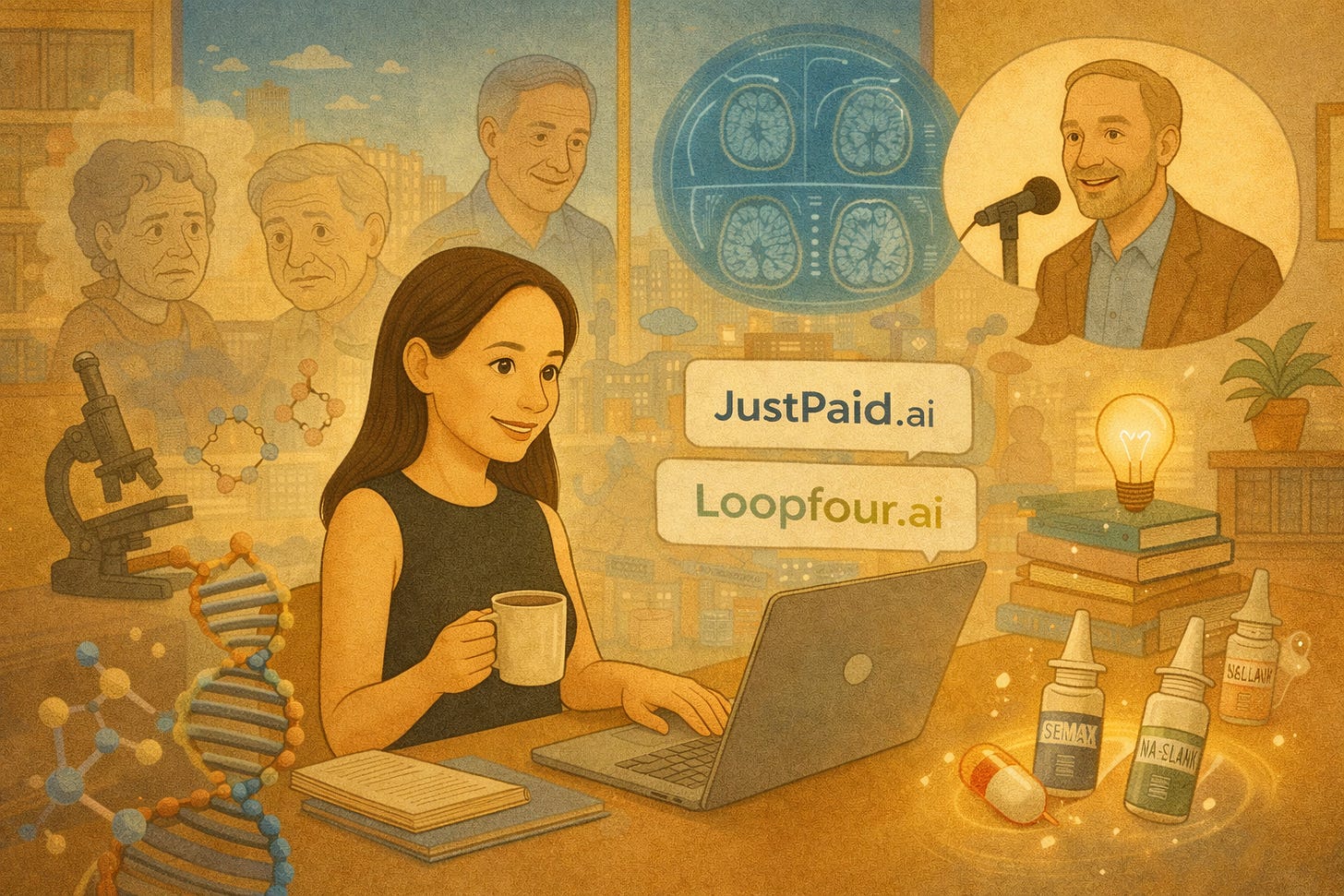
Brain Injuries, Nootropics, and My Peptide Experiments
While I haven’t had personal brain injuries (knock on wood), the pod’s injury chat got me reflecting on recovery tools. Tommy stresses early intervention- creatine, omegas, ketones for trauma. Me? Well I’ve dabbled in nootropics for that edge, especially amid founder stress.
First, quick explainer: Nootropics are “smart drugs” - substances boosting cognition, focus, memory without the crash (think caffeine on steroids, but safer). Difference from peptides are that many nootropics are synthetic or plant-based (e.g., bacopa), while peptides mimic body’s own (e.g., for neuroprotection). Peptides can be nootropics if they enhance brain function. But peptides often need injections/nasals, with more targeted effects; nootropics are broader, oral-friendly. Both hype-aware: Limited human trials, proceed with caution—Mayo Clinic and PubMed back basics, but Reddit threads add anecdotal spice.
My experiments:
NA-Selank (N-Acetyl Selank): This modified Selank variant’s more stable (acetylation/amidation slows breakdown for longer effects). Benefits? Anxiety melt-away without sedation. GABAergic calm, mood lift, focus boost. Studies (e.g., PubMed on Selank) show anti-anxiety without benzos’ baggage (no dependence/withdrawal). I nasal-sprayed it during high-stress launches; felt that balanced vibe, like chatting over coffee minus jitters. Safety? Preclinical/clinical deem it safe, low side effects - mild headaches rare.
Semax: Russian nootropic peptide, ACTH fragment. Actually used on patients with brain trauma, imagine what it does to a healthy brain. Upregulates BDNF for neuroplasticity - memory, focus, motivation surge. Effects are: sharp analytical edge, neuroprotective (stroke/TBI recovery vibes). Highlights cognitive endurance, dopamine tweaks without stimulants’ crash. I tried nasal spray for learning sprints; killer for deep work, but watch for mild BP bumps. Safe per studies, no serious issues in healthy folks.
GB-115: Lesser-known anxiolytic peptide, CCK receptor blocker (glycine-containing retropeptide). Fast-onset calm with stimulation: improves attention, reaction time, sleep without initial anxiety spikes (unlike SSRIs). My take? I tried it at the social event, and I felt that i’ve got my brain expanded and I was able to process more information, with clarity and focus. I now have it at home and use it a few times per week.
These aren’t mainstream (yet), and I’m tempering excitement. Peptides can be pricey, sourcing sketchy. From what I’ve tried, they align with Dr. Wood’s stimulation ethos, but they’re extras, not essentials.
Whew, that was a brain dump! I woke up excited to share my personal journey on the brain health and what I am experimenting with.
Stay sharp, folks! Here’s to not disappearing into the fog. 🚀
If you enjoyed this article, you might also enjoy reading:
Disclaimer
This is not medical advice. The content on this Substack is for informational and educational purposes only and is not intended to serve as a substitute for professional medical advice, diagnosis, or treatment. Always consult with a qualified healthcare provider before making any decisions regarding your health or the use of peptides.
My experiences with peptides are personal and may not be typical. Individual results can vary widely based on personal health conditions, lifestyle, and other factors. Do not rely on my experiences as a guarantee of similar outcomes.
The information provided here does not constitute an endorsement or recommendation by any regulatory authority, including the FDA or other health organizations. Some peptides may be experimental or not approved for general use.
I am not liable for any losses, injuries, or damages arising from the use or misuse of information shared on this Substack. Readers are solely responsible for their own actions and any decisions made based on this content.
The peptides discussed are for research purposes and may not be intended for human use. Please ensure compliance with all local laws and regulations regarding the purchase, possession, and use of peptides.
This post first appeared on Substack. Read the original, leave a comment, or subscribe to get the next one in your inbox.
Comments live on Substack. Subscriptions are free and go out every other Sunday.